

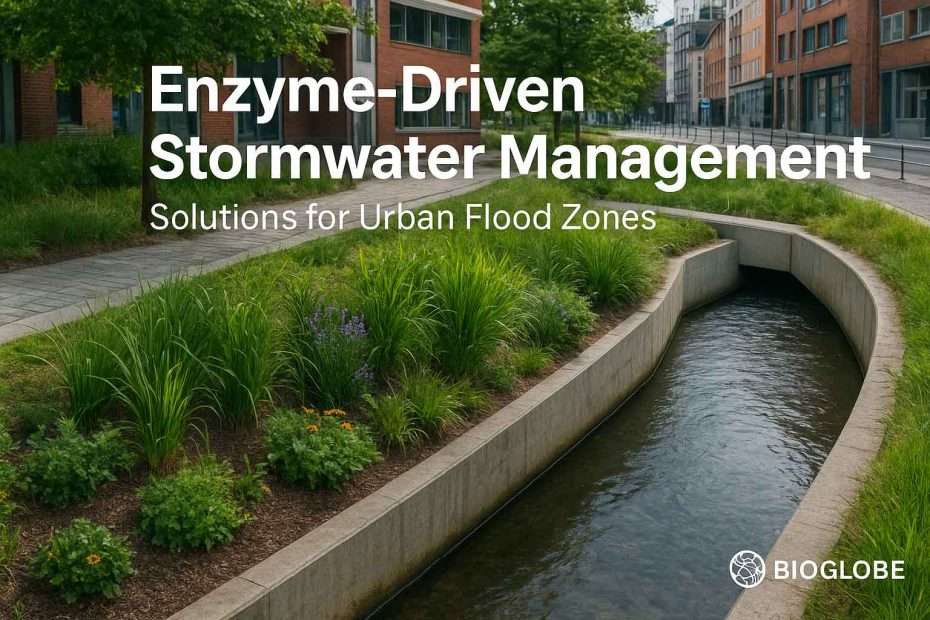
Enzyme-Driven Stormwater Management
Solutions for Urban Flood Zones
Introduction: Why Stormwater Matters More Than Ever
Across towns and cities in the United Kingdom, rainfall is changing. Downpours are becoming heavier, more intense and more unpredictable. At the same time, urban areas continue to expand. Gardens are paved over, roads and car parks multiply, and rooftops dominate the landscape. All of this creates one fundamental problem: rainwater no longer soaks naturally into the ground.
Instead, it rushes across hard surfaces, collecting pollutants as it goes, before pouring into drains, rivers and canals. This is what is known as stormwater runoff. While it may appear harmless at first glance, stormwater is now recognised as one of the most significant sources of water pollution in urban Britain.
Flooding, polluted rivers, damaged wildlife habitats and mounting pressure on drainage systems are no longer isolated issues. They affect ordinary people directly: flooded streets, overwhelmed sewers, unpleasant waterways, and rising bills for water management and repairs.
Traditional approaches to stormwater have focused on moving water away as quickly as possible. Pipes, culverts and concrete channels have dominated urban design for decades. However, these systems were never designed to cope with the scale of modern development or the intensity of today’s rainfall. More importantly, they do little to address pollution.
This is where a new way of thinking is emerging. Instead of fighting nature, modern stormwater management seeks to work with it. Green infrastructure, combined with biological solutions such as enzyme-based remediation, offers a practical, environmentally safe and cost-effective approach to managing stormwater in urban flood zones.
BioGlobe’s organic enzyme bioremediation solutions sit at the centre of this shift. By analysing pollutants and creating bespoke enzyme blends tailored to specific conditions, BioGlobe helps communities clean stormwater naturally, without damaging ecosystems or introducing harmful chemicals.
Understanding the Problem
What Is Stormwater Runoff?
Stormwater runoff is rainwater that flows over land rather than soaking into the soil. In natural environments, most rain is absorbed by vegetation and ground layers, slowly filtering through soil and rock before reaching streams and rivers. This process cleans the water and regulates flow.
In urban areas, however, surfaces such as roads, pavements, roofs and car parks prevent infiltration. Water moves rapidly across these surfaces, entering drains almost immediately. Along the way, it picks up whatever lies in its path.
What Pollutants Are Found in Urban Stormwater?
Stormwater in towns and cities typically contains a complex mix of contaminants, including:
- Oil, fuel and grease from vehicles
- Heavy metals from brake dust, tyres and building materials
- Nutrients such as nitrogen and phosphorus from fertilisers and organic waste
- Sediments and fine particles from construction sites and eroding surfaces
- Organic pollutants from litter, food waste and decaying plant matter
Unlike sewage, stormwater is often discharged into rivers and canals with little or no treatment, especially during heavy rainfall events. This means pollution enters natural waterways directly.
Why Is the Problem Getting Worse?
There are three main reasons stormwater pollution and flooding are intensifying in the UK:
- Urban Expansion
More housing, roads and infrastructure mean more impermeable surfaces and less green space. - Climate Change
Rainfall patterns are shifting towards shorter, more intense storms that overwhelm drainage systems. - Ageing Infrastructure
Much of the UK’s drainage network was built decades ago and was never designed for current conditions.
Together, these factors create a system under constant strain, with pollution and flood risk increasing year by year.
Consequences: Why Stormwater Pollution Affects Everyone
Stormwater is not just an environmental issue. Its impacts are wide-ranging and affect communities, wildlife, public health and local economies.
Damage to Rivers and Canals
When polluted runoff enters rivers and canals, it disrupts delicate ecosystems. Oil and hydrocarbons coat sediments and aquatic plants. Heavy metals accumulate in riverbeds and enter the food chain. Excess nutrients encourage algal blooms, which reduce oxygen levels and harm fish and invertebrates.
Over time, once-healthy waterways become degraded, murky and lifeless. Restoring them becomes costly and difficult.
Increased Flooding in Urban Areas
Fast-moving stormwater overwhelms drains and sewers, particularly during heavy rainfall. This leads to surface water flooding, affecting roads, homes and businesses. Flooding is not only disruptive but also emotionally and financially devastating for those affected.
As flood events become more frequent, insurance costs rise and property values can fall, placing further pressure on communities.
Public Health and Quality of Life
Polluted stormwater can carry bacteria, chemicals and unpleasant odours into public spaces. Urban rivers and canals are increasingly used for recreation, walking and community wellbeing. Poor water quality reduces these benefits and can pose health risks.
Flooded streets and polluted waterways also diminish the overall quality of urban life, making neighbourhoods less pleasant and less resilient.
Regulatory and Financial Pressure
Local authorities, developers and water utilities face growing regulatory expectations around water quality and flood management. Meeting these requirements using traditional infrastructure alone is expensive and often disruptive.
As costs rise, they are ultimately passed on to the public through higher bills and taxes.
Rethinking Stormwater: A Natural Approach
Moving Beyond Concrete and Pipes
Traditional stormwater systems focus on speed: moving water away as quickly as possible. While this may prevent immediate pooling, it transfers problems downstream and does nothing to treat pollution.
Modern thinking recognises that slowing water down, filtering it naturally and treating contaminants at source is far more effective.
The Role of Green Infrastructure
Green infrastructure refers to systems that use soil, plants and natural processes to manage water. Common examples include:
- Bioswales: Shallow, vegetated channels that slow and filter runoff
- Rain gardens: Planted areas designed to absorb and treat rainwater
- Permeable surfaces: Paving that allows water to soak through rather than run off
These systems reduce flood risk by holding water temporarily and filtering out sediments and some pollutants. They also enhance urban landscapes, support biodiversity and improve air quality.
However, green infrastructure alone has limitations. While it is effective at removing solids and some nutrients, it may struggle with dissolved organic pollutants, oils and hydrocarbons commonly found in urban runoff.
This is where enzyme-based bioremediation becomes transformative.
BioGlobe’s Enzyme-Driven Solution
What Is Enzyme Bioremediation?
Enzymes are naturally occurring biological catalysts. In simple terms, they speed up chemical reactions that already happen in nature. In environmental contexts, enzymes can break down complex pollutants into harmless substances such as water, carbon dioxide and simple organic compounds.
Unlike chemical treatments, enzymes do not kill beneficial organisms or leave toxic residues. Once their job is done, they naturally degrade.
How BioGlobe’s Approach Is Different
BioGlobe does not offer a one-size-fits-all product. Every site, every waterway and every pollution problem is different.
BioGlobe’s process begins with detailed analysis:
- Pollutant Identification
Samples of water, soil or sediment are analysed in the laboratory to identify the specific contaminants present. - Bespoke Enzyme Design
Based on the analysis, a tailored enzyme formulation is created to target those pollutants directly. - Targeted Application
Enzymes are applied in a controlled manner, integrated into existing systems or green infrastructure. - Natural Degradation
Pollutants are broken down into harmless components, and the enzymes themselves biodegrade without adverse effects.
This precision ensures maximum effectiveness while protecting ecosystems.
Problem, Consequences, Solution
Problem
Urban stormwater carries a complex mix of pollutants into rivers, canals and flood zones. Traditional drainage systems are overwhelmed by volume and do not treat contamination. As a result, water quality declines and flood risk increases.
Consequences
- Rivers and canals become polluted and ecologically damaged
- Flooding becomes more frequent and severe
- Public spaces and recreational waterways deteriorate
- Costs rise for water management, repairs and compliance
Without intervention, these problems will continue to worsen.
Solution
BioGlobe’s organic enzyme bioremediation, combined with green infrastructure, offers a natural and effective solution. By breaking down pollutants at source and enhancing existing drainage systems, stormwater can be managed safely, sustainably and without harm to ecosystems.
Enzymes and Green Infrastructure Working Together
Enhancing Natural Filtration
When enzymes are introduced into bioswales, rain gardens or permeable soils, they enhance natural processes. While plants and soil trap and filter particles, enzymes actively break down dissolved pollutants that would otherwise pass through untreated.
Adapting to Local Conditions
Urban environments vary widely. A busy road generates different pollutants from a residential area or an industrial estate. BioGlobe’s bespoke formulations ensure each location receives exactly what it needs, no more and no less.
Safe for People, Wildlife and Plants
Because BioGlobe’s solutions are organic and biodegradable, they pose no risk to wildlife, pets, children or beneficial microorganisms. This makes them suitable for use in public spaces and sensitive environments.
Supporting UK Stormwater Strategies
Helping Communities Meet Modern Expectations
Across the UK, there is a growing emphasis on sustainable drainage and nature-based solutions. Enzyme bioremediation complements these strategies by addressing pollution without requiring major new infrastructure.
Cost-Effective and Low Disruption
Compared to large engineering projects, enzyme treatments are relatively quick to deploy and require minimal disruption. This makes them attractive for retrofitting existing urban areas.
Building Resilience for the Future
By improving water quality and reducing pressure on drainage systems, enzyme-driven stormwater management helps communities adapt to future challenges, including climate change and urban growth.
A Practical Example: Urban Flood Zones
In areas prone to surface water flooding, stormwater often accumulates in low-lying zones before entering rivers or canals. These locations are ideal for integrated solutions.
By combining planted swales, shallow retention areas and enzyme treatment zones, stormwater can be slowed, cleaned and released safely. Pollutants are broken down naturally, flood peaks are reduced, and downstream ecosystems are protected.
For residents, this means fewer flooded streets, cleaner waterways and more attractive neighbourhoods.
Why This Matters to Ordinary People
Stormwater management may sound technical, but its effects are felt in everyday life. Clean rivers, reduced flood risk, safer streets and healthier urban environments benefit everyone.
Organic enzyme solutions offer a way forward that does not rely on harsh chemicals or endless construction. Instead, they harness natural processes to solve modern problems.
BioGlobe’s work demonstrates that environmental protection and practical urban management do not have to be in conflict. With the right approach, they can support each other.
Looking Ahead
As urban pressures continue to grow, stormwater will remain a defining challenge for UK towns and cities. Solutions must be adaptable, sustainable and safe.
Enzyme-driven stormwater management represents a shift towards smarter, nature-aligned thinking. By combining science, biology and green design, it offers a path to cleaner water, reduced flooding and healthier communities.
BioGlobe’s commitment to bespoke, organic remediation ensures that each project is tailored to real-world conditions, delivering results without compromising ecosystems.
Frequently Asked Questions
1. What makes enzyme bioremediation different from chemical treatments?
Enzymes accelerate natural breakdown processes rather than killing organisms or masking pollution. They are biodegradable and do not leave harmful residues.
2. Is enzyme treatment safe for wildlife and plants?
Yes. BioGlobe’s enzyme solutions are organic and designed to work alongside natural ecosystems without causing harm.
3. Can enzyme solutions be used in existing drainage systems?
They can be integrated into many existing systems, including green infrastructure, without major construction work.
4. How long do enzyme treatments last?
Enzymes remain active as long as pollutants are present. Once their task is complete, they naturally degrade.
5. Who benefits most from enzyme-driven stormwater management?
Everyone benefits, from local residents and businesses to wildlife and water authorities, through cleaner water, reduced flooding and more resilient urban environments.
Bioglobe offer Organic Enzyme pollution remediation for major oil-spills, oceans and coastal waters, marinas and inland water, sewage and nitrate remediation and agriculture and brown-field sites, throughout the UK and Europe.
We have created our own Enzyme based bioremediation in our own laboratory in Cyprus and we are able to create bespoke variants for maximum efficacy.
Our team are able to identify the pollution, we then assess the problem, conduct site tests and send samples to our lab where we can create a bespoke variant, we then conduct a pilot test and proceed from there.
Our Enzyme solutions are available around the world, remediation pollution organically without any harm to the ecosystem.
For further information:
BioGlobe LTD (UK),
Phone: +44(0) 116 4736303| Email: info@bioglobe.co.uk